Historical Origins of Qixiong Ruqun
Qixiong ruqun (齐胸襦裙, qíxiōng rúqún), literally “chest-high ruqun,” is a style of traditional Han Chinese women’s attire characterised by a skirt that is fastened above the chest. It emerged as a distinctive dress during the Sui and Tang dynasties (6th–10th centuries) and was especially popular in the Tang era. In contrast to earlier periods when skirts were tied at the waist, this high-waisted fashion was so unique that historical records first dubbed it the “high-waist ruqun,” later formally identifying it as Qixiong ruqun. The style persisted through the Five Dynasties period and even saw a revival in the early Ming dynasty. Its enduring appeal is evidenced by an old Chinese idiom – “to bow before the pomegranate skirt,” referring to being captivated by a woman’s charm – where the “pomegranate skirt” denotes none other than the vibrant Qixiong ruqun.
Clothing Structure and How to Wear It
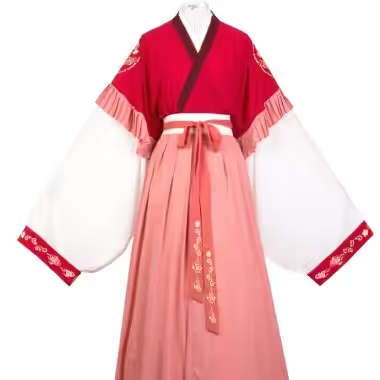
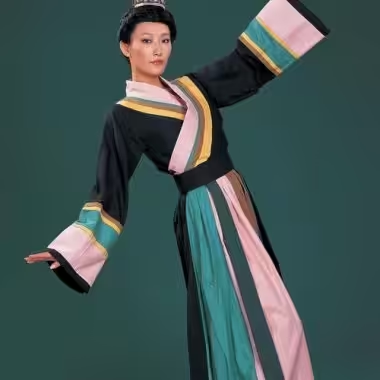
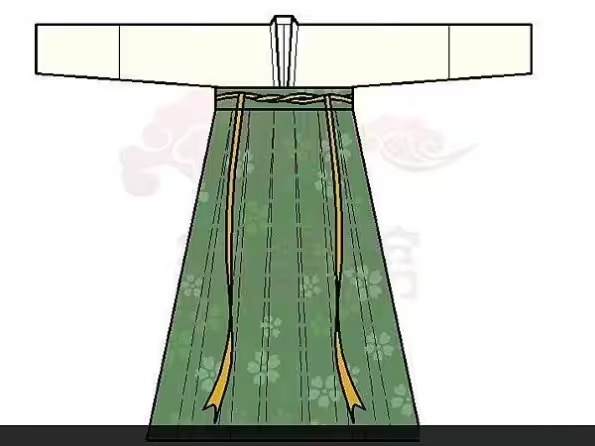
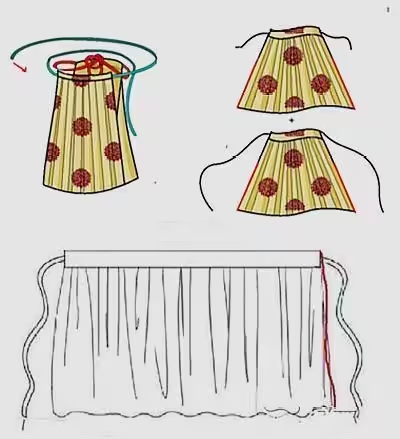
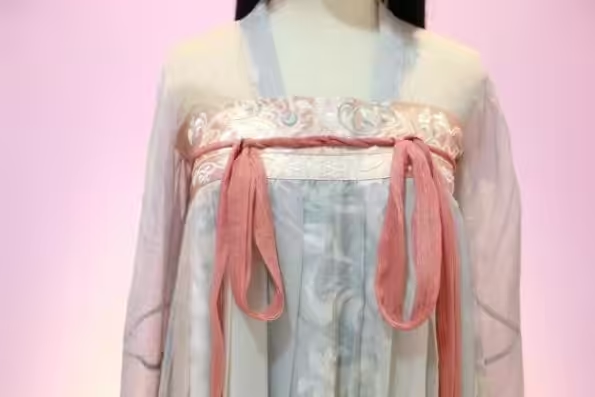
A Qixiong ruqun outfit typically consists of two main parts: a short upper blouse (ru, 襦) and a long pleated skirt (qun, 裙). The skirt is long and is tied just under the bust, giving the ensemble its high empire waist silhouette. The upper garment can have either a straight, centre-opening collar (duijin) or a cross-over collar (jiaoling), with the straight-collar style being more commonly used historically. Sleeves of the blouse vary from narrow to wide, and women in the Tang period often added an extra half-sleeve jacket (banbi) for layering. A typical way to secure the high skirt was with long ribbons; some women also wore a hezi (诃子), a bandeau-like undergarment, to help keep the skirt in.
To enhance the regal look, Tang ladies would drape a light silk shawl called a pibo (披帛) over their shoulders and sometimes don a flowing, large-sleeved robe (daxiushan) on top for formal occasions. Traditionally, the skirt itself came in two formats: a one-piece wrap style or a two-piece style made of two panels that tie at the back and front, respectively. Both achieve the same elegant silhouette, though the tying methods differ slightly. Learning to wear a Qixiong ruqun gracefully can take practice – the high skirt needs to be snug enough to stay up, yet comfortable. Once dressed, the effect is a graceful, floating appearance unique to this Hanfu style.
Aesthetic Features and Cultural Significance
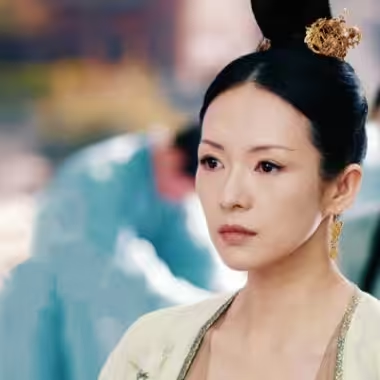
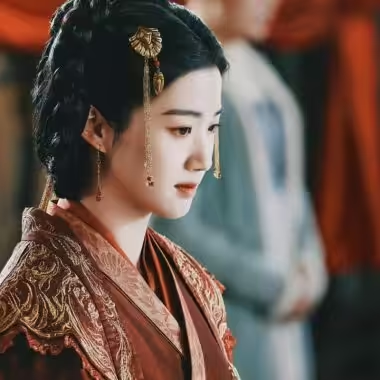
The Qixiong ruqun embodies a distinctive aesthetic of the Tang dynasty: graceful, luxuriant, and culturally iconic. With its elevated waistline and flowing drapery, this attire creates an elongated silhouette that highlights feminine elegance and poise. Tang-era Qixiong ruqun were often made of vibrant, richly decorated fabrics – for example, skirts in brilliant reds (hence the “pomegranate skirt” nickname) and blouses with fine silk embroidery – reflecting the prosperous, open culture of the time. The addition of the gauzy pibo shawl and sometimes a trailing daxiushan robe gave the wearer an ethereal, almost goddess-like appearance through layered textures. This style was considered one of the most splendid and eye-catching ensembles in Chinese fashion history, symbolising the height of aesthetic refinement in the Tang period.
Culturally, Qixiong ruqun has left a lasting impression. It frequently appears in Tang dynasty art, such as court lady paintings and pottery figurines, attesting to its prevalence among noblewomen. Classical poetry also celebrated the beauty of women in ruqun, reinforcing its image as an icon of graceful womanhood. The aforementioned idiom about the pomegranate skirt is a testament to how this garment became a metaphor for irresistible beauty. Today, wearing a Qixiong ruqun is not only a fashion statement but also a cultural homage – it connects the wearer with a heritage of elegance and historic significance.
Modern Revival and Styling
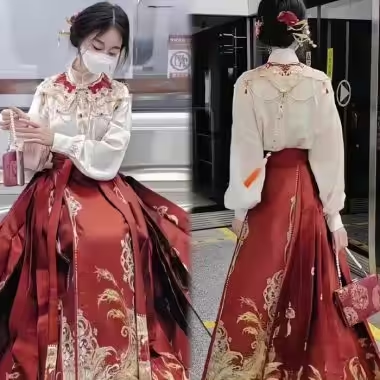
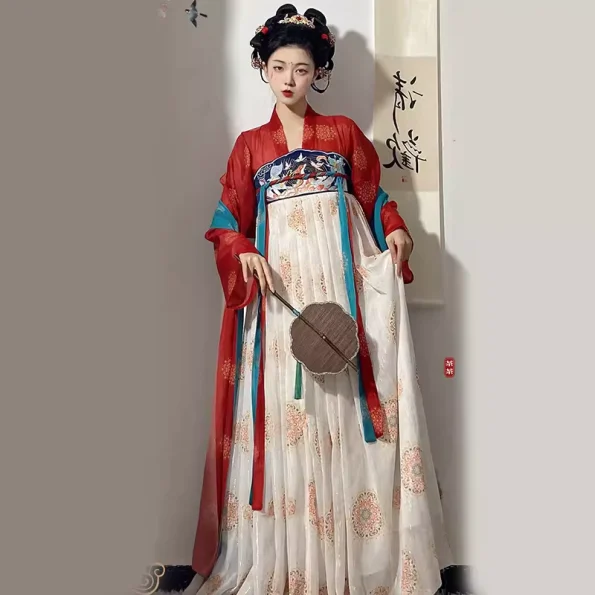
In recent years, Qixiong ruqun has experienced a vibrant revival as part of the broader Hanfu movement. It is gaining great popularity among young women and Hanfu enthusiasts who are charmed by its romantic, historical look. Modern designers have embraced this style, creating Qixiong ruqun sets that blend traditional design with modern comfort – using breathable, soft fabrics and updated tailoring to suit contemporary tastes. For instance, some modern Qixiong ruqun outfits incorporate hidden zippers or adjustable straps to make dressing easier while preserving the authentic appearance. Both one-piece and two-piece skirt versions are available today, catering to different comfort levels and making it simpler for beginners to wear this hanfu.
When it comes to styling, today’s wearers often get creative by mixing traditional and modern elements. It’s not uncommon to see a Qixiong ruqun paired with subtle modern accessories: a delicate necklace, comfortable flats, or even a fashionable coat during cooler weather, seamlessly blending ancient elegance with everyday practicality. Many fashion influencers and everyday hanfu lovers share photos of themselves wearing Qixiong ruqun in daily life – from strolling in the park to attending afternoon tea – proving that this 1,300-year-old style can still shine in the modern world. The Qixiong ruqun’s timeless charm, combined with a bit of modern ingenuity, allows it to be worn not just as a costume but as a unique form of personal expression today.
Occasions and Seasons to Wear It
One of the advantages of Qixiong ruqun is its versatility in both occasions and seasons. The outfit is especially suited for spring and summer, when its airy, flowing silk or chiffon materials keep the wearer cool and comfortable. In warm weather, the light layers of a Qixiong ruqun catch the breeze beautifully, making it ideal for outdoor cultural festivals, garden parties, or photoshoots amid nature. You could easily wear it for a stroll through a floral park or to a casual gathering with friends, and it will lend you an elegant, head-turning aura. In fact, historically, the Tang dynasty ladies wore Qixiong ruqun as daily dress during the balmy months of the year, which speaks to its comfort in a casual context.
For special occasions, Qixiong ruqun can be a stunning choice to showcase Chinese heritage. It’s commonly seen at hanfu conventions, traditional holidays (like Mid-Autumn or Lunar New Year celebrations), weddings with historical themes, and stage performances. The style’s inherent grandeur – especially if paired with the formal daxiushan robe and traditional hair ornaments – makes it suitable for ceremonies or photography that calls for a touch of Tang dynasty glamour. In cooler seasons or more formal evenings, one can wear warmer under-layers and add a coat or the robe above to a Qixiong ruqun, making it adaptable for autumn and even winter events. Essentially, whether you’re attending a festival, enjoying a cultural event, or wish to infuse your everyday life with a bit of ancient elegance, the Qixiong ruqun is fitting. Its graceful design ensures you stand out with poise in any crowd.