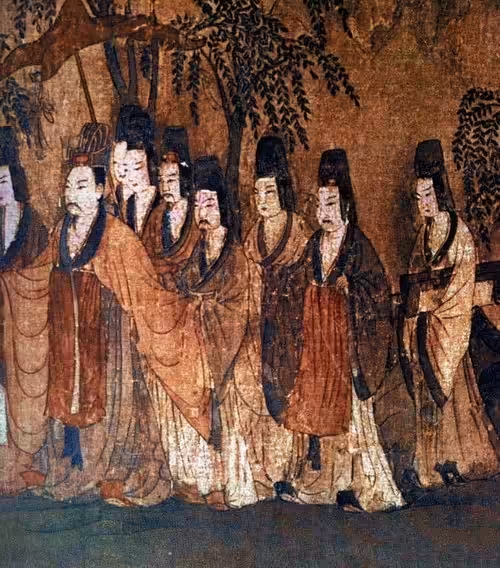
Depiction of a civil official in robe – detail from Nymph of the Luo River by Gu Kaizhi
Introduction and Historical Context
Almost from the day clothing appeared, people have integrated their social status, living customs, aesthetic tastes, and various cultural concepts into it. The appearance of clothing is the most direct and realistic reflection of the social and historical landscape; in this sense, the history of clothing is also a vivid history of civilization’s development. Chinese people are accustomed to summarizing daily life as “clothing, food, housing, and transportation” (衣食住行, yī shí zhù xíng), placing clothing first, which demonstrates its importance in life.
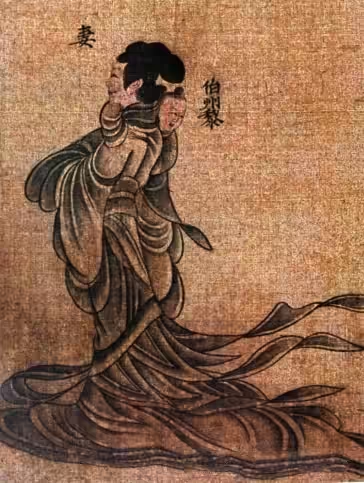
A woman wearing a Zhaju Chuishao robe (detail from the attributed Scroll of Exemplary Women by Gu Kaizhi)
The period of the Wei-Jin and Southern-Northern Dynasties (魏晋南北朝, Wèijìn Nánběicháo): From 220 AD to 581 AD, after the 400-year reign of the Han Dynasty collapsed, China fractured. The ensuing conflicts, notably the Three Kingdoms, and power struggles of the two Jin Dynasties, allowed numerous surrounding nomadic peoples to seize the opportunity, establishing more than a dozen minor kingdoms in the Central Plains. This left China in the unprecedented chaos of the Wei-Jin and Southern-Northern Dynasties (魏晋南北朝, Wèijìn Nánběicháo) from the 3rd to 6th centuries.
The warfare and massive ethnic migrations led to the collision and exchange of different regional cultures. The functionality of traditional clothing was strengthened during this time, while the aesthetic style pursued an ethereal and detached quality, known as the Ethereal and Immortal Demeanor (仙风道骨, Xiānfēng Dàogǔ).
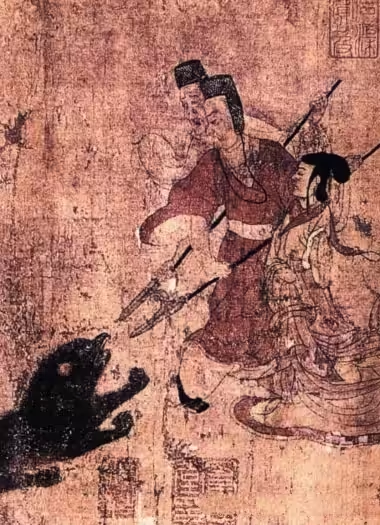
One section of Gu Kaizhi’s Admonitions of the Instructress to the Court Ladies (Eastern Jin Dynasty), housed in the British Museum, London. The male figure wears a curved-collar wide-sleeved long robe, while the female figure has a “wo duo” bun hairstyle, wears a right-lapped blouse with drooping sleeves and a floor-length skirt, the waist tied with a narrow ribbon belt.
Male Attire
Lacquered Gauze Cage Cap (漆纱笼冠, Qīshā Lóngguān)
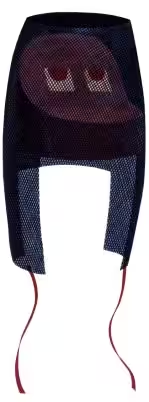
Lacquered Gauze Headdress (reconstructed based on surviving silk paintings, murals, and excavated pottery figurines)
The Lacquered Gauze Cage Cap (漆纱笼冠, Qīshā Lóngguān) was a highly distinctive and major type of headwear during the Wei-Jin and Southern-Northern Dynasties (魏晋南北朝, Wèijìn Nánběicháo). It could be worn by both men and women. Named for being made from fine black lacquered gauze, the cap featured a flat top, ear flaps hanging down on both sides, and was secured underneath with silk ribbons.
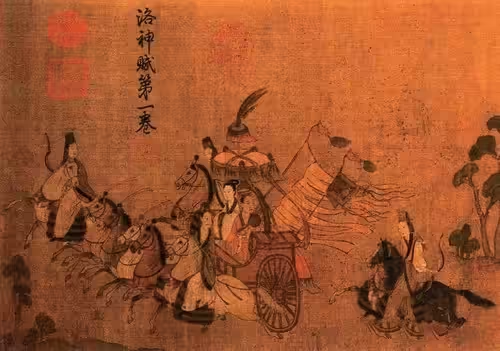
A nobleman and his attendants wearing wide-sleeved robes (detail from Gu Kaizhi’s Nymph of the Luo River)
Wide-sleeved Loose Shirt/Robe (大袖宽衫, Dàxiù Kuānshān)
People during the Wei-Jin period revered Daoism and Metaphysics. Hoping for immortality, the practice of refining and consuming elixirs (丹药, dānyào) was common. Since ingesting elixirs often caused the body to feel hot, tight-fitting clothes were unsuitable. Coupled with the pursuit of the Ethereal and Immortal Demeanor (仙风道骨, Xiānfēng Dàogǔ), people at this time favored loose and voluminous clothing, commonly known as the Wide-sleeved Loose Shirt/Robe (大袖宽衫, Dàxiù Kuānshān).
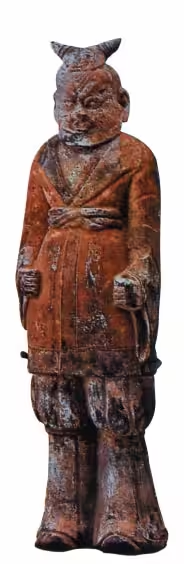
A man wearing pleated trousers (Northern Dynasties pottery figurine, surviving original artifact)
Kuzhe (裤褶, Kùzhě)
Kuzhe (裤褶, Kùzhě) was essentially a top-and-trousers combination, typically featuring a large-sleeved top and wide-legged trousers. Originally the traditional clothing of Northern nomadic tribes, the Kuzhe became widespread in Han Chinese regions during the Southern and Northern Dynasties. As the trouser cuffs grew wider, people used brocade belts to bind the trouser legs for ease of movement, a practice called Bound Trousers (缚裤, Fùkù). Later, both the sleeves and trouser cuffs became even more expansive, giving rise to terms like Wide-sleeved Pleated Garment (广袖褶衣, Guǎngxiù Zhěyī) and Large-mouthed Trousers (大口裤, Dàkǒu Kù), which were very popular.
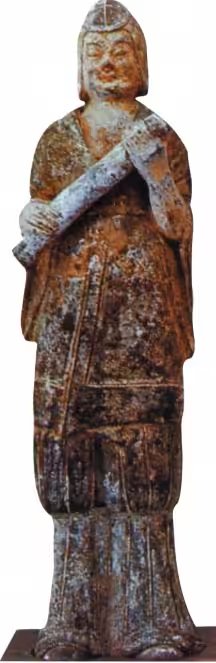
A woman wearing pleated trousers (Northern Dynasties pottery figurine, surviving original artifact)
Scholarly Attire
Influenced by prevailing philosophical trends (Metaphysics, Daoism, and Buddhism), the literati and gentry class advocated for nihility, disregarded formalities, and sometimes led unrestrained lives in pursuit of the Ethereal and Immortal Demeanor (仙风道骨, Xiānfēng Dàogǔ). In terms of clothing, this manifested as a preference for loose shirts (shānzi), often worn open to expose the chest, symbolizing freedom and unconstraint.
Female Attire
Garment with Multiple Hem Panels and Trailing Sashes (杂裾垂髾服, Zájū Chuíshā Fú)
Women in the Wei-Jin period would attach layers of overlapping triangular decorative cloth to the hem of their shenyi (a traditional one-piece robe), and also tie a weishang (waist skirt), from which many long sashes trailed. Because soft and flowing silk was used, these decorations made the women appear more dynamic and rhythmic when walking. These elements eventually merged to form the style known as the Garment with Multiple Hem Panels and Trailing Sashes (杂裾垂髾服, Zájū Chuíshā Fú), which gave Wei-Jin women an agile and ethereal demeanor.
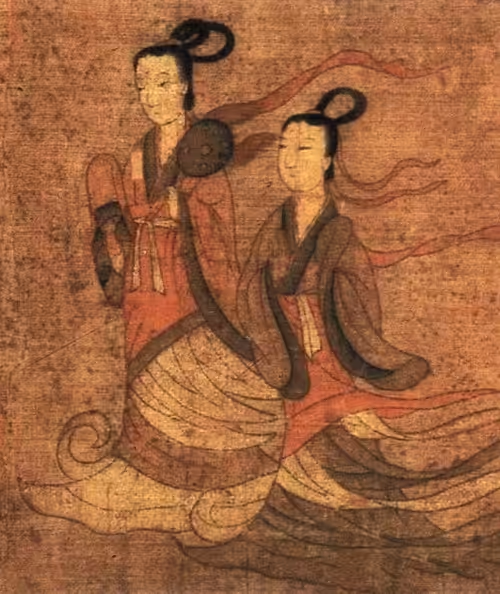
Depiction of a woman in a Zhaju Chuishao robe — detail from Nymph of the Luo River by Gu Kaizhi.
Shirt and Skirt (衫裙, Shānqún)
The Shirt and Skirt (衫裙, Shānqún) was the common attire for Wei-Jin women. The upper garment (shān) was close-fitting, but the sleeves were wide and voluminous. The skirt (qún) often had multiple pleats, extended to the floor, and was loose and flowing. This silhouette—close-fitting on top and voluminous on the bottom—combined with rich accessories, showcased the elegant and beautiful grace of Wei-Jin women, making it a classic form of traditional Chinese women’s clothing.
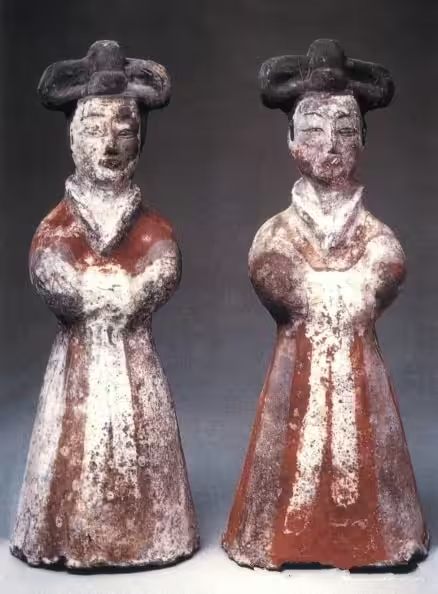
A painted female figurine with a cross-shaped high bun and wearing a narrow-sleeved blouse and skirt (excavated from a Northern Wei tomb at Caocangpo, Xi’an, Shaanxi Province)A painted female figurine with a cross-shaped high bun and wearing a narrow-sleeved blouse and skirt (excavated from a Northern Wei tomb at Caocangpo, Xi’an, Shaanxi Province)
Women’s Buns
Wei-Jin women were fond of using wigs (jiǎfà) to style their hair into buns. Common styles included:
- Cross Bun (十字髻, Shízì Jì*): A cross-shape was styled on the crown with the rest of the hair hanging down.
- Coiled Bun (盘桓髻, Pánhuán Jì*): The hair was coiled repeatedly before being formed into a bun.
- Flying Immortal Bun (飞天髻, Fēitiān Jì*): The hair was arranged into rings that swayed in the air.
Wigs were used to increase the height of the bun, pursuing a beautiful, asymmetrical, and alluring effect.
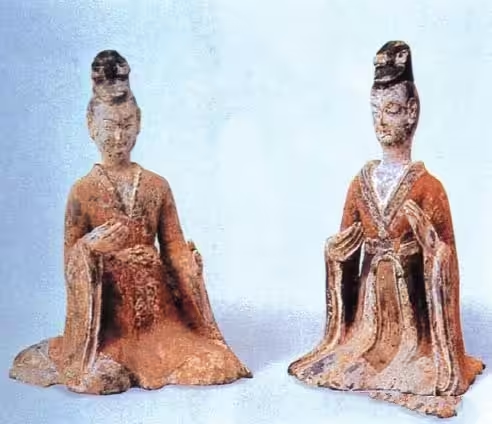
Musician dressed in a Ruqun (blouse-and-skirt ensemble) — Northern Dynasties pottery figurine (extant artifact).
Military and Commoner Attire
Two-part Armor/Armor Vest (裲裆铠, Liǎngdāng Kǎi)
The primary armor during the Southern and Northern Dynasties was the Two-part Armor/Armor Vest (裲裆铠, Liǎngdāng Kǎi). It was mostly made of hard metal and leather, with scales or lamellae shaped in either long strips or fish scales. Soldiers typically wore a thick cloth two-part undershirt (裲裆衫, liǎngdāng shān) underneath the armor to prevent the hard lamellae from chafing the skin. (The armor is often paired with a Helmet, 兜鍪, Dōumóu).
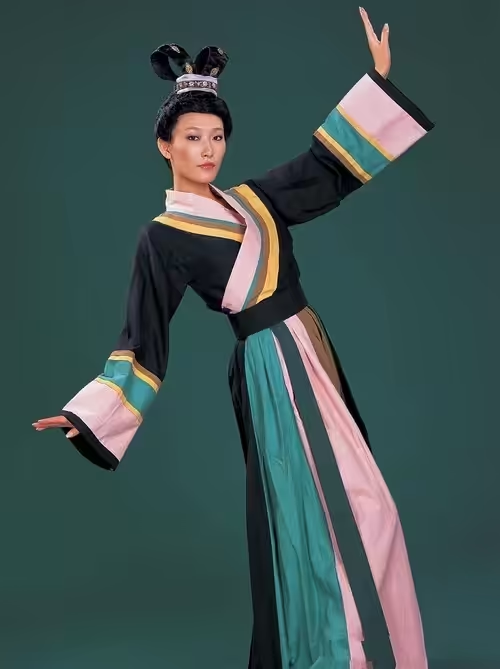
Commoner’s Attire
The clothing of commoners during the Wei-Jin period was very diverse, captured in paintings depicting scenes of daily life such as collecting mulberry leaves, farming, hunting, and feasting. Examples include the women’s skirts and robes, farmers’ robes, hunters’ caps and hats, and shepherds’ puttees/bindings.
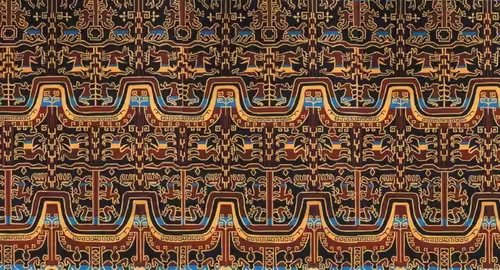
Decorative Patterns
Foreign decorative motifs significantly augmented the patterns used during the Wei-Jin and Southern-Northern Dynasties (魏晋南北朝, Wèijìn Nánběicháo). These included:
- The Sacred Tree Pattern (圣树纹, Shèngshù Wén), which featured characteristics of ancient Arabian decoration.
- The Buddhist-inspired Heavenly King Transformation Pattern (天王化生纹, Tiānwáng Huàshēng Wén).
- Composite small-to-medium geometric patterns.
- The Honeysuckle Pattern (忍冬纹, Rěndōng Wén).
These patterns shared the common features of symmetrical arrangement, low dynamism, and strong decorative appeal.