
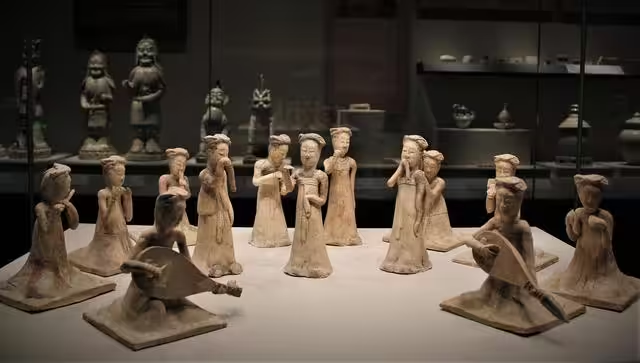
In the rich tapestry of traditional Chinese clothing, the poqun (破裙) stands out as a distinctive skirt style within Hanfu (汉服, traditional Han Chinese attire). This article from Hanfu Way delves into the definition, historical evolution, unique construction, and modern revival of the poqun, providing a comprehensive overview for enthusiasts of ancient Chinese garments.
Definition and Origin
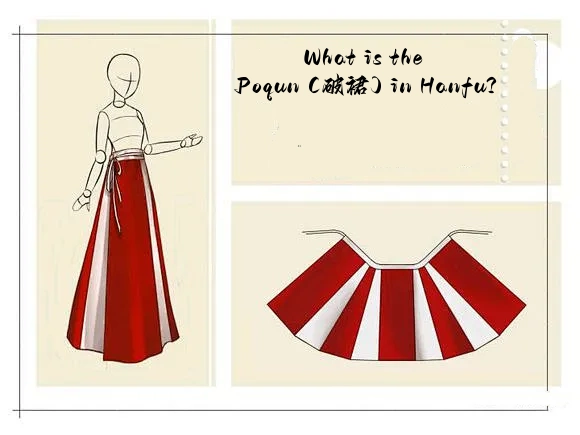
The poqun (破裙) – also known as jiaoyu qun (交窬裙) or jiaoshu qun (交输裙) – is a type of traditional Hanfu skirt characterized by a trapezoidal panel construction. According to historical records and archaeological findings, the poqun dates back to the pre-Qin period (before 221 BCE) and became widely popular from the Wei and Jin dynasties through the Northern and Southern Dynasties up to the Sui and Tang dynasties (3rd–10th centuries CE). Notably, the word “破” (pò, meaning “broken” or “split”) in its name does not imply damage. Instead, it refers to the technique of cutting fabric into multiple trapezoid pieces and sewing them together into a skirt. For example, a “six-po skirt” is made of six trapezoidal panels, whereas a “twelve-po skirt” uses twelve panels in its construction.
Historical Evolution and Design Features
-
Wei-Jin to Tang Dynasty Popularity
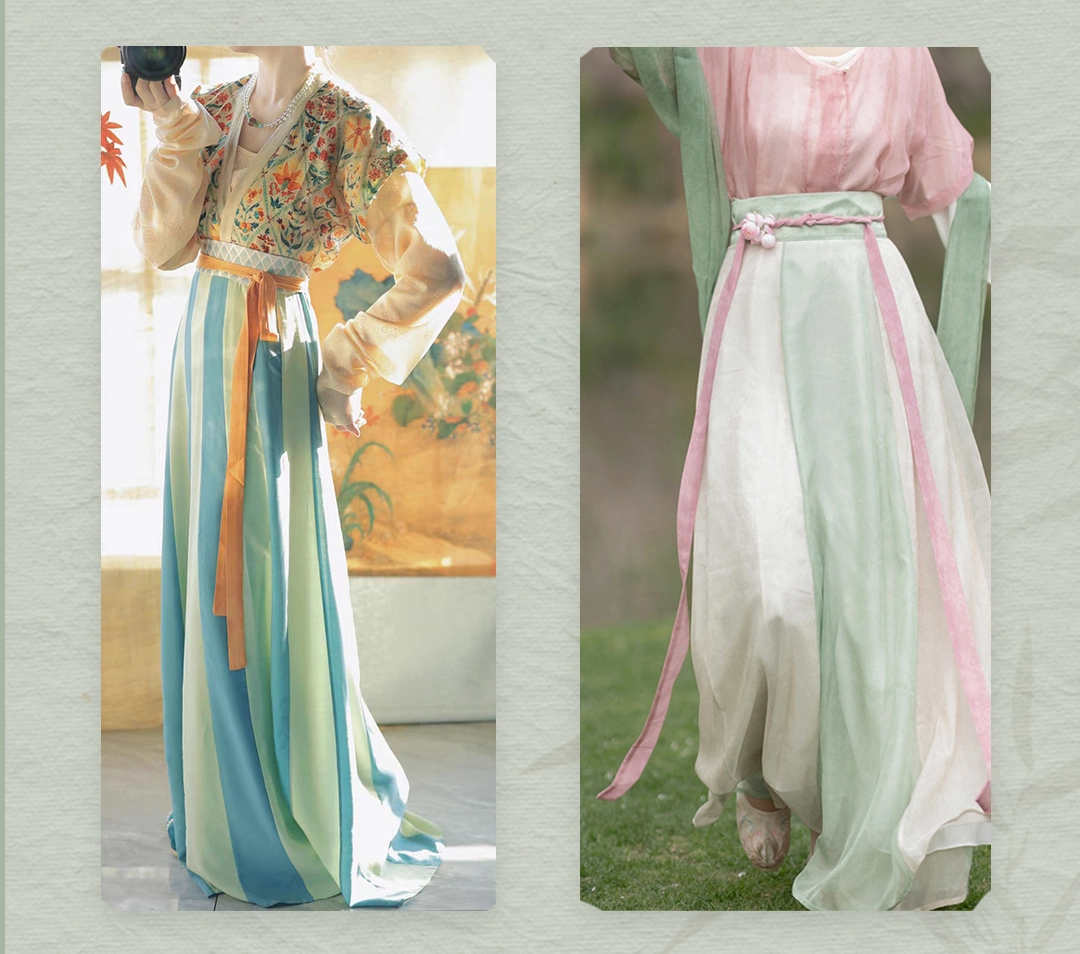
During the Wei and Jin periods, the poqun was typically worn in a waist-high style (齐腰, qíyāo), with the skirt tied around the waist and often finished with small decorative hems. By the Tang Dynasty, it evolved into a chest-high style (齐胸, qíxiōng), creating a more flowy and dynamic silhouette. This evolution in wearing method gave the poqun an ethereal, floating appearance favored in Tang fashion. Historical texts such as the Old Book of Tang and New Book of Tang frequently mention “six-po” and “twelve-po” skirts, emphasizing their multi-panel tailoring. These records also reflect clothing regulations of the time – for instance, commoner women were restricted in the number of skirt panels (the “po” count) they could wear, indicating a link between skirt construction and social status.Tang Dynasty poqun skirts often employed luxurious silk fabrics like ling (绫) damask and sha (纱) gauze. A notable design feature was alternating-color paneling (间色拼接), where panels of different colors (e.g. red and white or green and white) were sewn in succession. This created a visually slimming yet ornate effect. One famous example is an eight-panel poqun skirt unearthed in Turpan, Xinjiang, woven with eight differently colored warp threads into a patterned design. This artifact showcases the poqun’s rich and elegant craftsmanship during the Tang era – the skirt’s multi-colored panels and fine silk fabric give it a regal, eye-catching appearance.
-
Structural Characteristics
Each fabric panel in a poqun is cut as a trapezoid shape that is narrow at the top and wide at the bottom (either a right-angled or isosceles trapezoid). When these panels are stitched edge-to-edge, they form a naturally flared A-line silhouette. The skirt drapes smoothly over the body’s curves, achieving a flattering, form-fitting look while still allowing ease of movement. This panel construction provides volume to the skirt without requiring extensive pleating, making the poqun efficient in fabric usage compared to some other skirt styles.In certain historical poqun examples, additional small pleats were incorporated at the seams to refine the fit. Some skirts included “gongzi” pleats (工字褶) – named for their resemblance to the shape of the Chinese character “工”, essentially a type of box pleat – or “live” pleats (活褶) that were left unstitched at the bottom to allow flexibility. For instance, a Southern Song Dynasty poqun skirt excavated from Lady Zhou’s tomb, described as a “four-panel three-pleat skirt” (四破三裥裙), featured four trapezoidal panels with three extra pleats at the waistband. These pleats could be adjusted to fine-tune the skirt’s fit, helping to achieve a more tailored, slimming effect around the wearer’s waist.
Construction and Wearing Method
-
Cutting and Sewing
Making a poqun requires cutting the fabric into multiple trapezoidal pieces and then sewing them together with the angled edges and straight edges alternating. The panels are joined into a continuous circular skirt form. For example, an eight-panel poqun needs eight trapezoid pieces; when laid out, the skirt’s hem opens into a wide fan shape, with a circumference that can exceed 3 meters (10 feet). Such a wide hem gives the skirt a grand, flowing drape. Tang dynasty artisans often employed special techniques to ensure the skirt hung gracefully. These included trimming the hem (修摆) into subtle scallops or sawtooth shapes and carefully aligning the fabric’s warp and weft threads during stitching. These methods enhanced the skirt’s vertical drape and prevented the panels and any pleats from twisting or misaligning, resulting in a smooth, elegant flow from waist to hem. -
Wearing Method
Traditional poqun skirts were worn wrapped and tied around the body. Historical records and artwork from the Tang Dynasty show that women would wrap the poqun around the waist or chest and secure it with long sashes or bands. The skirt might be wound around the waist one and a half times or even multiple turns before tying, creating layered folds. When the wearer walked or spun around, the overlapping layers of the poqun’s hem would spread out, producing a beautiful tiered, swirling effect. This gave an impression of depth and movement, contributing to the poqun’s graceful reputation. Some Tang-era versions of the poqun even attached shoulder straps (similar to modern suspenders) that went over the shoulders. These straps helped fix a high-waisted (chest-high) poqun in place, preventing the skirt from slipping down and ensuring the elegant silhouette was maintained throughout motion.
Differences Between Poqun and Other Hanfu Skirts
-
Compared to Pleated Skirts (褶裙)
The common Hanfu pleated skirt (褶裙, zhequn) is characterized by evenly spaced pleats gathered around the skirt. Its shape and volume come primarily from those uniform pleats. In contrast, the poqun achieves its volume and silhouette through the trapezoidal panels themselves, with any pleating being minimal or purely supplemental. The poqun’s panel construction naturally introduces gentle folds and an A-line shape without needing heavy pleating. As a result, poqun skirts tend to be more form-fitting (providing a slimming appearance) and use fabric more economically, since less material is folded into pleats. In other words, a poqun can create a full, elegant skirt shape with fewer layers of cloth compared to a fully pleated skirt. -
Relation to Sanjian Skirt and Baidie Skirt
The sanjian qun (三裥裙), which translates to “three-pleat skirt,” is a variation that evolved from the poqun concept. As seen in the Southern Song example of the four-panel three-pleat skirt, a sanjian qun still uses the trapezoidal panel structure of a poqun but adds three prominent pleats at the skirt’s top (waistband). These pleats (often in the form of gongzi pleats) give the skirt a different look and fit while retaining the fundamental panel-cut design. We can think of the sanjian qun as a hybrid between a poqun and a pleated skirt – it’s essentially a poqun with an added pleated detail for style and shape adjustment.On the other hand, the baidie qun (百迭裙) of the Song Dynasty – literally “hundred pleats skirt” – features extensive pleating but in a specific configuration. A typical baidie skirt has densely packed pleats across the central portion of the skirt, while the two sides (near the seams) are left as flat, unpleated panels. This means the middle of the skirt carries the volume of many small pleats, and the sides provide smooth sections. The baidie qun’s construction is quite different from the uniformly paneled approach of a poqun. Whereas the poqun’s shape comes from the angled panels, the baidie relies on middle-section pleating combined with flat side panels. In summary, poqun is defined by its multi-panel assembly, sanjian qun is a poqun with added pleats at the top, and baidie qun is a heavily pleated skirt with a unique distribution of pleats, distinguishing it from the panel-based poqun design.
Modern Revival and Adaptation in Hanfu
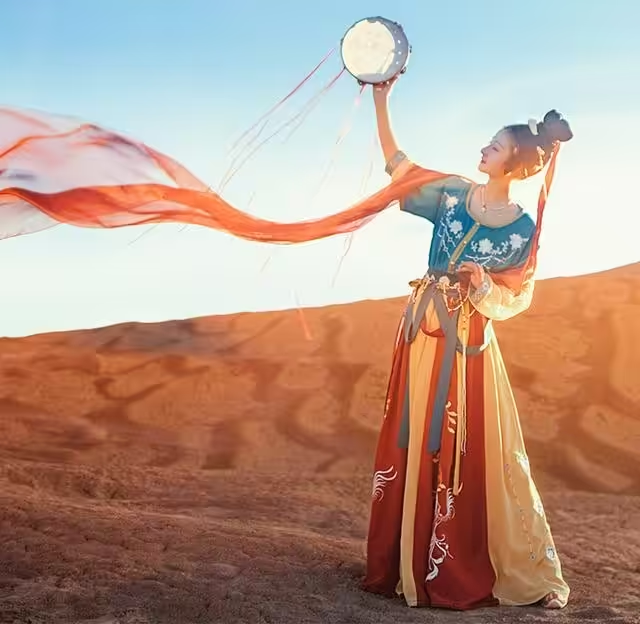
The legacy of the poqun continues in today’s Hanfu revival movement. Modern Hanfu enthusiasts and tailors often recreate poqun skirts using the same traditional trapezoidal cutting techniques that were employed in antiquity. To capture the airy, flowing elegance of Tang Dynasty skirts, contemporary poqun designs commonly use lightweight materials such as chiffon, tulle, or fine silk – materials that drape softly and create graceful movement. These fabrics mimic the drapey, fluttering effect that ancient silk gauze and damask had, allowing wearers to experience the poqun’s historical charm in the present day.
At the same time, modern innovations have been introduced to make the poqun more practical for daily wear. Many Hanfu clothing brands and shops – including Hanfu Way – now offer poqun-inspired skirts with subtle updates. For example, some designs incorporate invisible shoulder straps or adjustable waist ties hidden within the folds. These additions help secure chest-high poqun styles firmly (preventing any slipping) and allow wearers to adjust the fit with ease. Other modifications might include using durable yet breathable linings, or snap and button closures to simplify the wrapping process. These tweaks ensure that the poqun remains true to its traditional form while meeting the comfort and convenience needs of modern fashion. In essence, the poqun has been successfully brought into the 21st century – maintaining its cultural authenticity as an iconic piece of traditional Chinese clothing, yet evolving to be wearable for people today.
