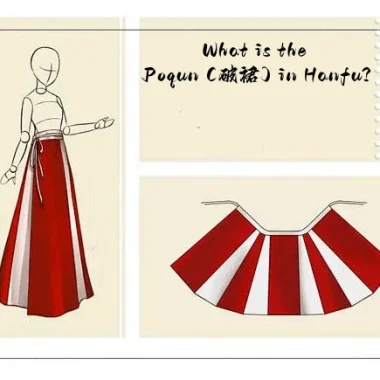
Hanfu – the traditional clothing of the Han Chinese – encompasses a rich variety of garments developed over millennia. This guide explores the most important Hanfu types for both men and women, with professional terminology, clear explanations, and keywords to help readers discover and appreciate the beauty of Chinese traditional clothing.
Men’s Hanfu Clothing Styles
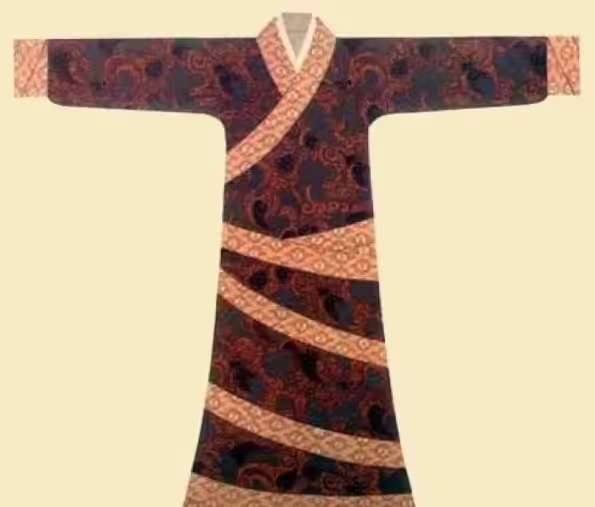
Shenyi (深衣 — Deep Robe)
A one-piece robe where the upper garment and lower skirt are sewn together. Two key forms are the Quju (曲裾, curved hem wrap) and Zhiju (直裾, straight hem). Dignified and ceremonial, the shenyi was worn by scholars and officials.
Zhiduo / Zhishen (直缀/直裰 — Straight Robe)
A long, straight-cut robe with side slits and no overlapping front panel. Popular from the Song to Ming dynasties, it served as everyday wear for scholars and gentlemen.
Daopao (道袍 — Taoist Robe)
A comfortable, semi-formal outer robe with side slits and an extra inner panel. Although associated with Daoism, it was widely used by Confucian scholars and even grooms.
Shuhe (裋褐 — Commoner’s Tunic)
A practical, short garment of coarse fabric, historically worn by farmers and labourers.
Xuanduan (玄端 — Dark Court Attire)
A highly formal outfit for rituals and ceremonies. Traditionally black or deep blue with a red skirt, it symbolised propriety and respect.
Yuanlingpao (圆领袍 — Round-Collar Robe)
A round-neck robe influenced by nomadic styles, widely worn in Tang, Song, and Ming times. It became formal attire for officials and scholars.
Lanshan (襕衫 — Scholar’s Robe)
A round-collar robe with a horizontal seam near the knees. Favoured by scholars and used in imperial exams, representing learning and dignity.
Dachang (大氅 — Greatcloak)
A large, draped overcoat with wide sleeves, practical for travel and outdoor use while maintaining an elegant, relaxed look.
Feiyu Fu (飞鱼服 — Flying Fish Robe)
An honour robe from the Ming dynasty with a distinctive flying fish motif, originally worn by imperial guards and later granted as a special reward.
Beizi (褙子 — Long Jacket)
A straight, open-front coat worn by men as an extra layer. Styles ranged from simple dark gauze to heavier lined versions.
Banbi (半臂 — Half-Sleeve Jacket)
A short-sleeved outer layer, lightweight and practical in warmer weather. Its Ming version evolved into the Dahu, a military-inspired jacket.
Women’s Hanfu Clothing Styles
Shenyi (深衣 — Deep Robe)
Similar to men’s versions, with Quju and Zhiju variations. Elegant one-piece garments common in early dynasties.
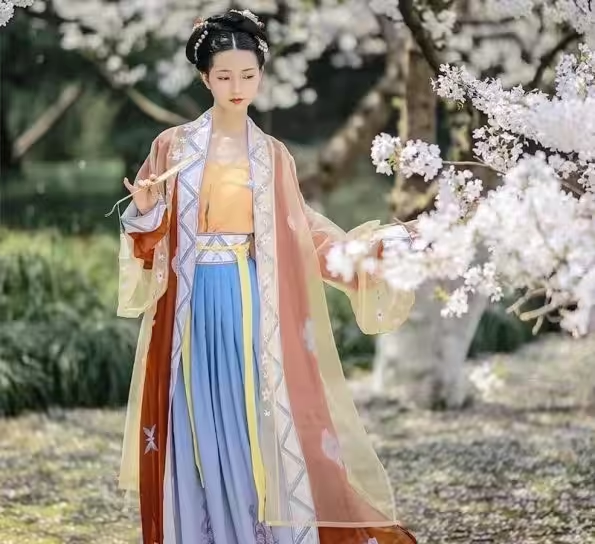
Ruqun (襦裙 — Blouse and Skirt)
Perhaps the most iconic women’s Hanfu. Variants include:
-
Qiyao Ruqun — waist-tied skirt
-
Gaoyao Ruqun — high-waist skirt
-
Qixiong Ruqun — chest-high skirt
Blouse collars include Jiaoling (cross-collar) and Duijin (straight-front). Upper garments range from light Danru to padded Furu.
Aoqun (袄裙 — Jacket and Skirt)
A warm, structured outfit of a padded ao jacket and long skirt (often the Mamian, horse-face skirt). Suitable for daily wear or semi-formal occasions.
Duanhe (短褐 — Short Work Coat)
A plain, practical coat for everyday labour, similar to the men’s shuhe.
Yuanlingpao (圆领袍 — Round-Collar Robe)
Adopted by some women, especially for riding or casual wear in Tang times.
Daxiushan (大袖衫 — Large Sleeve Gown)
A grand gown with extra-wide sleeves, popular among Tang noblewomen and dancers.
Beizi (褙子 — Long Overcoat)
A Song-Ming staple: straight-front, open coat with side slits, worn casually or for formal occasions.
Banbi (半臂 — Short-Sleeved Blouse)
Trendy in the Tang dynasty, slightly revealing and often worn with a shawl for style.
Bijia (比甲 — Sleeveless Vest)
A long, sleeveless vest popular in the Ming dynasty for layering and added warmth.
Pibo (披帛 — Silk Shawl)
A flowing silk scarf accessory, especially beloved in the Tang era for its elegant draping.
These garments illustrate the incredible depth and elegance of Hanfu — from stately robes like the shenyi and xuanduan to graceful outfits such as ruqun and daxiushan. Each style reflects centuries of artistry and cultural heritage. Understanding these terms helps anyone appreciate the history of Hanfu and select authentic, meaningful attire.