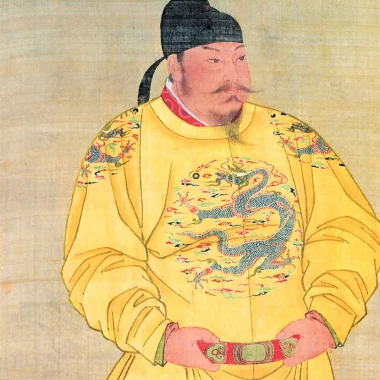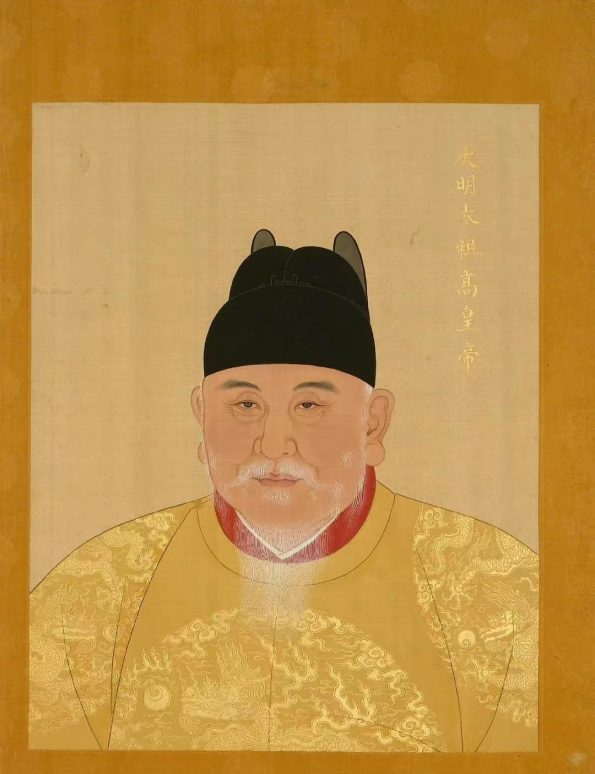
If one were to ask which Chinese emperor paid the most attention to dress, Zhu Yuanzhang, the founding emperor of the Ming Dynasty, would certainly be on the list.
After establishing the dynasty, Zhu Yuanzhang issued an Edict to Restore Attire (Yiguan Fugu Zhao), which mandated the restoration of clothing systems similar to the Tang Dynasty (“zhao fu yiguan ru Tang zhi“) and a complete return to old Chinese customs (“xi fu Zhongguo zhi jiu yi“). He also personally participated in establishing the detailed dress code.
Throughout his 31 years of rule, Zhu Yuanzhang repeatedly revised and supplemented the regulations. These rules detailed the fabric, style, size, and color of clothing for people of every rank and status, enforced by state power—wearing the wrong clothes was no joke in the early Ming period.
However, the pursuit of beauty and individual consciousness eventually overcame top-down court restrictions. While early Ming society favored simplicity, in the mid-to-late Ming period, clothing became increasingly luxurious. Official dress codes were often ignored, and the art of dress flourished, characterized by a pursuit of self-expression, novelty, and distinctiveness.
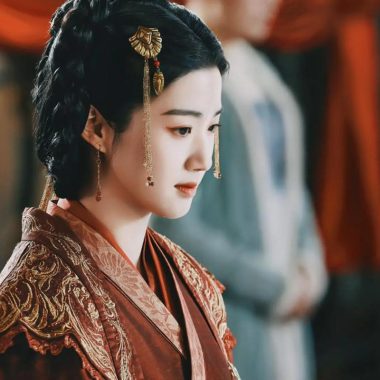
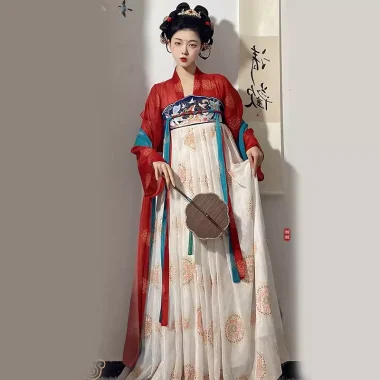
The traditional Chinese dress system, reaching its peak in the mid-to-late Ming Dynasty, inherited the essence of the Tang and Song dynasties while absorbing the era’s novel and magnificent cultural elements. Driven by advancements in textile technology, the style presented an atmosphere of regal grandeur, dignity, and elegance. If the Han, Tang, and Ming dynasties form the cornerstones of traditional Chinese dress history, Ming Hanfu is considered the great synthesis of ancient Chinese dress culture.
The Lapel: The Refinements of Neckline Style
Speaking of Ming Dynasty attire, one must mention the distinctive standing collar, or vertical collar (liling).
The vertical collar, which encircles the neck and is fastened by one or two clasps, is a representative style of the mid-to-late Ming Dynasty, often considered unique to the era. How did this collar, in contrast to the long-standing cross-collar, emerge and become a new fashion darling?
The secret lies in the tiny button. Unlike the cross-collar, the vertical collar allows for two buttons to be fastened at the neck. If these buttons were made of gold, silver, or even precious stones, they would serve as a dazzling focal point at the collar and lapel, enhancing the wearer’s prestige and adding a brilliant finishing touch. For a vertical-collar, center-fastened jacket (duijin shan), up to seven buttons could be used.
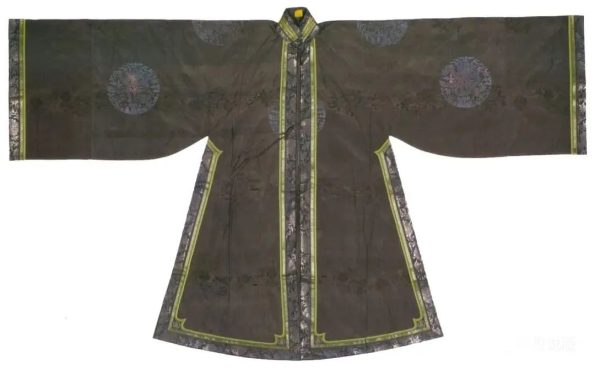
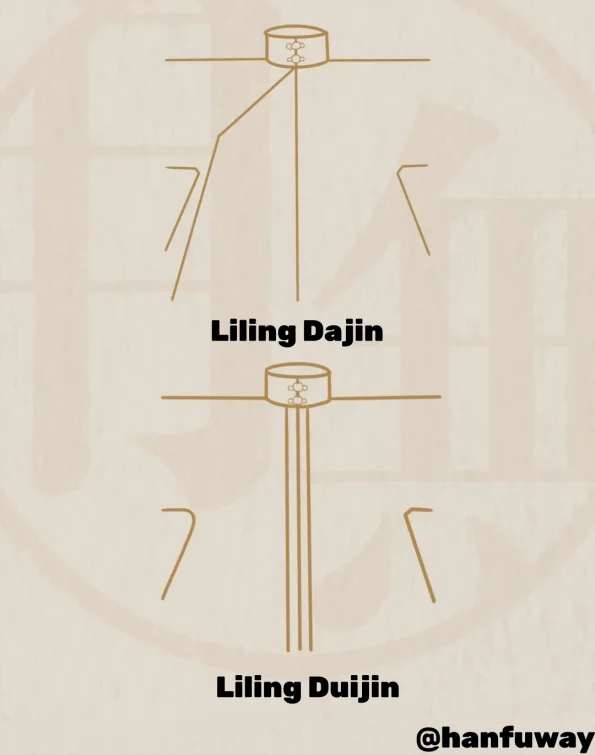
Besides the use of buttons, the vertical collar fits closer to the neck and back, highlighting the length and elegance of the neck. Based on unearthed artifacts and portraits, there are generally two forms of the Ming vertical collar:
- Vertical Collar with Large Front Lapel (Liling Dajin/竖领大襟): Simple and smooth edges, typically fastened with three to four sets of ties under the armpit.
- Vertical Collar with Center Fastening (Liling Duijin/立领对襟): The front opens symmetrically, closed with ties or buttons. If buttons are used, they typically come in sets of three, five, or seven.
Sometimes the vertical collar was worn folded over, creating a unique revers collar (fanling).
The Ming Dynasty lapel was not limited to the vertical collar. Despite the strict early dress codes, the flourishing commercial economy in the mid-to-late Ming led to changes in people’s mindsets and values. Aesthetic preferences shifted from the “simple, singular, and rigidly ordered style of the early Ming toward opulence, luxury, and diverse novelty.” Consequently, not only did the garment styles diversify, but the lapel forms also became richer:
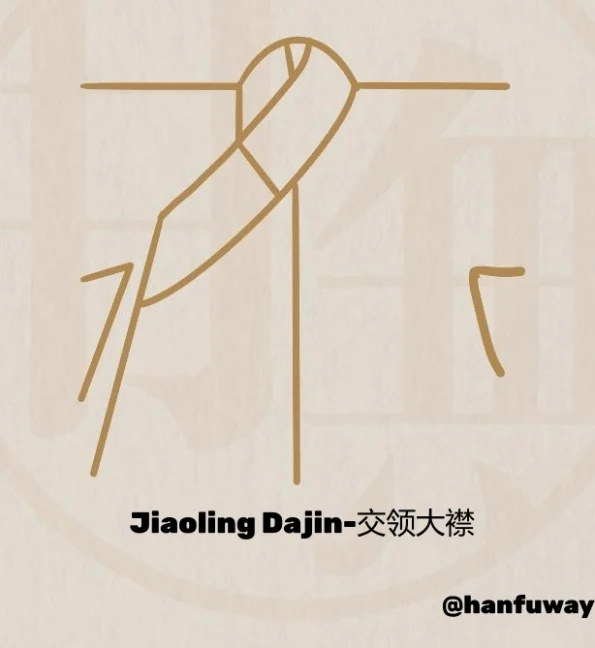
Jiaoling Dajin/交领大襟
- Cross Collar with Large Front Lapel (Jiaoling Dajin/交领大襟): The oldest form of Chinese clothing lapel and the signature feature of Hán phục. The two lapels cross and overlap at the chest.
- Left Lapel Over Right (Zuoren): The left side covers the right. Historically favored by Northern ethnic groups, it was also used for burial clothes (shrouds) in Han Chinese customs to distinguish the deceased.
- Right Lapel Over Left (Youren): The traditional style of the Huaxia (Han) people, where the left side is covered by the right.
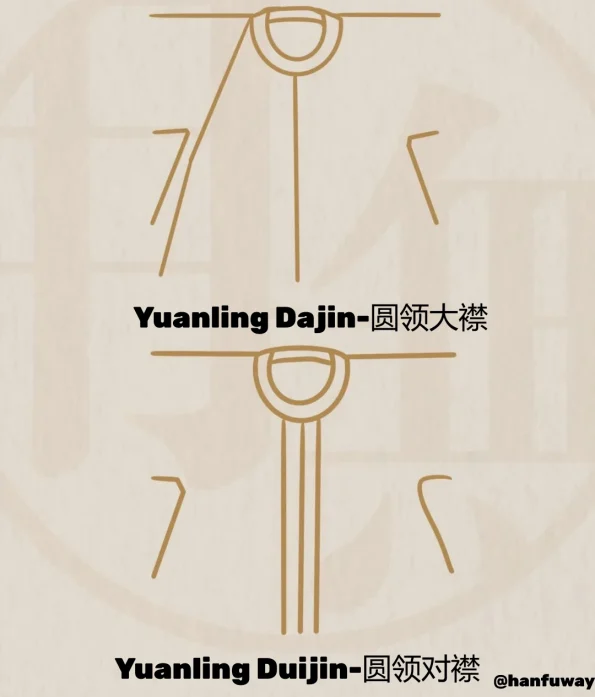
- Round Collar (Yuanling hoặc Tuanling): Introduced from the Western Regions and popularized in the Sui and Tang dynasties as everyday wear. The Ming Dynasty inherited this system, and the round collar was worn by both men and women.
- Round Collar with Large Front Lapel (Yuanling Dajin/圆领大襟): Usually fastened with a button near the shoulder to secure the large front piece.
- Round Collar with Center Fastening (Yuanling Duijin/圆领对襟): Symmetrical lapels, closed with buttons or ties. Round-collar garments were often worn to expose the collar of the undergarment, adding a layer of visual depth.
- Square Collar (Fangling): Another distinctive Ming style. The collar corners are square, opening down the center, connected to the left and right front pieces, which are typically parallel and fastened with buttons. This open and comfortable style was usually worn as an outer layer over a vertical or cross-collar garment, allowing the inner collar to be visible.
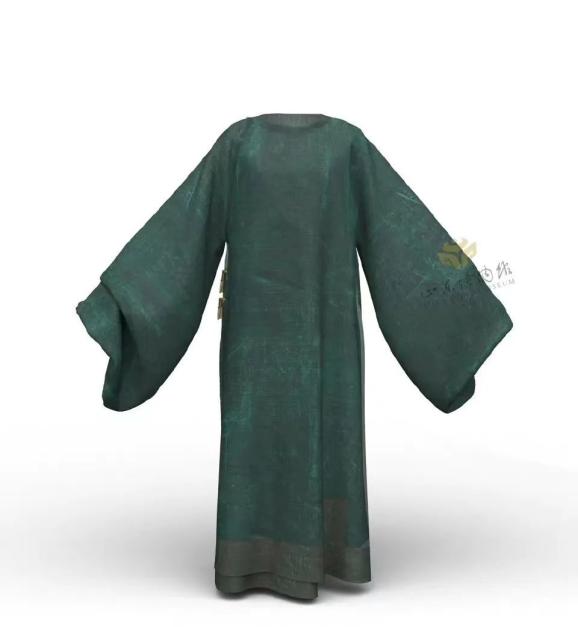
The lapel is a crucial component of clothing. Beyond its practical function of keeping the wearer warm, a well-designed collar provides a beautiful visual effect, occupying a vital position in traditional Chinese dress culture, where the collar structure often determines the shape of the entire garment front.
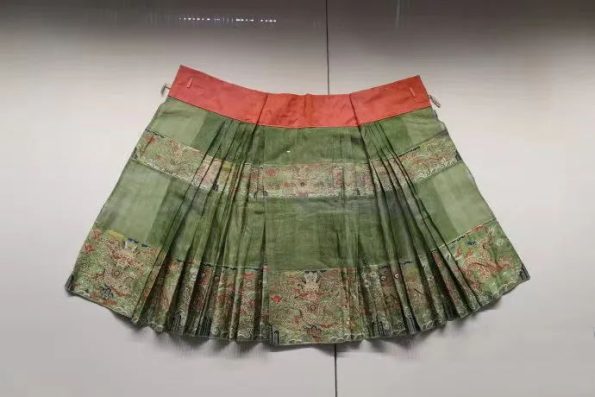
Mamian Skirt/Ma Mian Qun (马面裙)
The Ma Mian Qun: An Indigenous Chinese Tradition
What is a Mẹ Skirt/Mã Miên Quần (马面裙)?
Simply put, it is a skirt that features a smooth, unpleated panel at the front (and back) with pleated fabric on the sides. The skirt consists of four overlapping panels, two in the front and two in the back, creating a symmetrical structure. The outer panels are often decorated with rich auspicious patterns, such as dragon or cloud-and-python motifs for the official gentry, symbolizing high status and well-wishes for peace and joy.
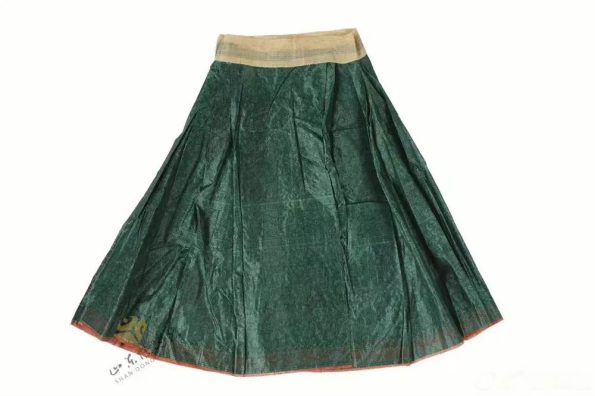
Mamian Skirt/Ma Mian Qun (马面裙)
Why is it called Mẹ (Horse Face)?
The term Mẹ is not related to the “Ox-Head and Horse-Face” figures of the underworld. Its earliest documented appearance in historical literature, such as the Ming Palace History (Ming Gong Shi), describes a garment called a Yisa: “The Yisa has an unbroken back panel, side vents, and a two-section front panel with a Mẹ pleat below, folding to the sides.”
Another explanation suggests that Mẹ is an architectural term referring to an ancient military defense structure—a protruding rectangular turret built at intervals along a city wall, allowing defenders to launch flanking attacks on attackers. The combination of the smooth front panel and the pleated sides of the skirt indeed bears a striking resemblance to this architectural structure.
The history of the Ma Mian Qun can be traced back to the Song Dynasty’s Whirling Skirt (Xuanqun), a functional skirt designed for women riding donkeys, characterized by front and back slits for ease of movement. The Song-era Xuanqun gradually developed into the Ma Mian Qun in the Ming Dynasty.
The Ma Mian Qun was widely worn by all social classes, from the Empress to the common people, with differences in material, decoration, and color indicating social status. Its diverse and meaningful patterns often included dragon and phoenix motifs (symbolizing auspiciousness and good marriage) or plant patterns like peonies (representing wealth) and chrysanthemums (for longevity). The elegant and magnificent Mẹ skirt is cherished not just for its beauty but for its rich cultural significance.
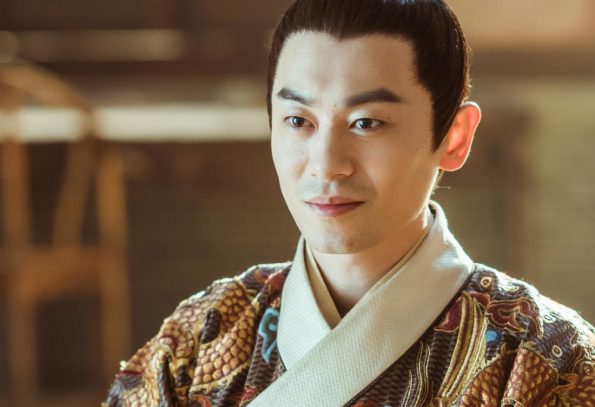
Ming Dynasty Seasonal Dressing Guide
Many people have the misconception that “Tang and Song attire is for hot weather, and Ming attire is for cold weather.” This is an oversimplified and incorrect generalization, as it implies Ming clothes are only suitable for winter.
This impression may stem from television and film portrayals. Because Ming attire—whether vertical or cross-collar—often covers the neck more than other dynasties, the visual impression can lead to the crude assumption that a high collar equals winter clothing.
One theory suggests the Ming dress code, with its fuller coverage, was a response to the “Little Ice Age,” a period of climate extremes that occurred primarily in the late Ming and early Qing periods. However, this period brought not only extremely cold winters but also hotter summers.
In reality, most ancient clothing styles appear “overly layered” to modern eyes; this was a matter of dressing habits, not unique to the Ming Dynasty. Even fully covered garments could be cool and sheer in summer when made of different materials. Conversely, seemingly light garments could be made warm by adding cotton padding or thick linings for winter.
Here is a look at the Ming Dynasty wardrobe through the seasons.
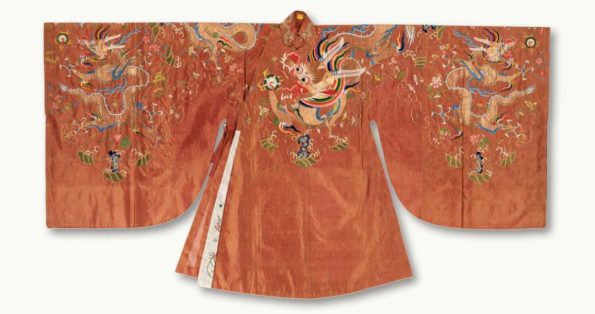
Women’s Attire
Mùa hè
In private settings, Ming women’s summer attire was quite cool. The upper body might consist of only a Bandeau (moxiong hoặc zhuyao) covered by a light Gauze Shirt (hanshan), or just the gauze shirt alone. The lower body was comparably more conservative, with underpants, inner pants (xiku), and a skirt (qun) all worn.
- Innerwear (Bandeau): Known as zhuyao hoặc moxiong, made of fabrics like gauze, damask, or silk gauze. The most common form was a horizontal band equal to the bust circumference, wrapping around the chest and fastened with buttons or ties at the front or back. A vest-like style with a cinching waist was also common.
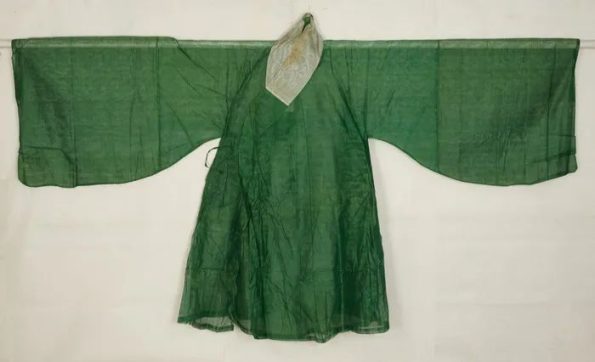
- Gauze Shirt (Hanshan/汗衫): Originally called zhongyi (middle garment) or zhongdan (middle single layer), made of gauze and fine silk. The name Hàn Sơn (Sweat Shirt) is said to originate from Liu Bang, founder of the Han Dynasty, who allegedly named his sweat-soaked inner garment this after a battle. Wearing a hanshan at home offered coolness and comfort. For going out, an additional, often sheer outer layer was worn, which, along with the hanshan, maintained propriety by covering the moxiong.
- Knee Pants (Xiku/膝裤) and Skirt (Qun): The lower garments included xiku (worn as a stocking-like layer over underpants) and the outer skirt. The xiku connected the space between the hem of the skirt and the shoes, covering simple socks and adding a touch of elegance with popular decorative patterns.
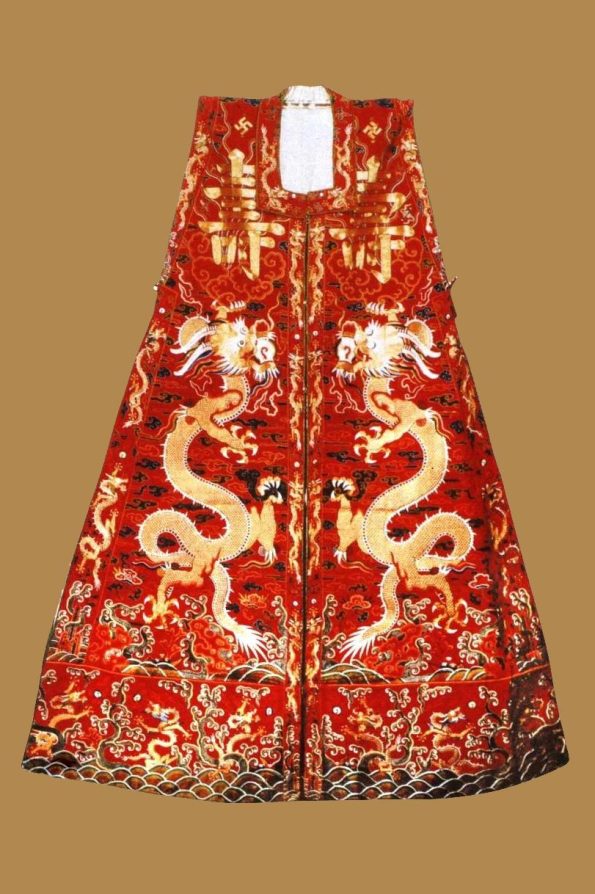
Bijia/比甲
For public occasions, women would layer up:
- Shirt (Shan/衫): Light, sheer shirts made of gauze were worn with long skirts, forming the classic short-top and long-skirt ensemble, which created an elongated silhouette. By the mid-to-late Ming, women’s long shirts (similar in length to men’s) became fashionable, conveying a gentle, plain, and elegant appearance.
- Sleeveless Vest (Bijia/比甲): A sleeveless, center-fastened vest with side slits. Originating in the Yuan Dynasty, it evolved from the Tang and Song half-sleeved and vest styles. It was worn by all classes and seasons. While not highly functional for warmth, it was prized for its decorative effect, creating a slim, layered look, and was a staple in women’s daily wardrobes.
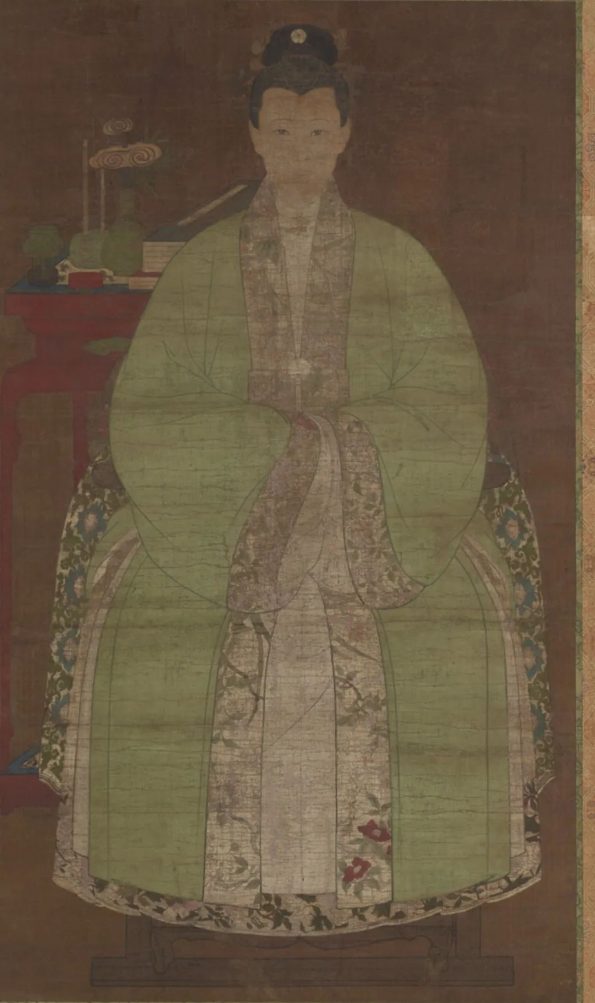
Mùa đông
In the cooler seasons, people switched to fabrics like satin, fine silk (juan), silk (chou), and cotton. For colder weather, padded jackets (áo) and lined jackets (chen’ao) were worn, with outerwear options like capes (pifeng) and long robes (changyi), providing excellent warmth.
- Padded Jacket (Ao/袄): In the Ming Dynasty, unlined single garments were called shan (shirt), and lined, padded garments were called áo (jacket). The skirt (qun) replaced the traditional shang (lower garment), leading to the Ao-Skirt system (Ao-qun zhi). Women’s áo came in various lengths (long, medium, short) and could be worn as an inner or outer layer, with inner layers using softer, plainer fabrics.
- Lined Jacket (Jia Ao/夹袄): Has two layers (shell and lining).
- Cotton-Padded Jacket (Mian Ao/棉袄): Wadded with silk floss or cotton.
- Fur Jacket (Pi Ao/皮袄): Made from animal hides like mink, fox, or squirrel, mostly in a center-fastened style.
In the depths of winter, Ming women would replace their gauze undergarments with ones made of padded or lined fabrics, layering small jackets, lined jackets, and outer jackets. Those sensitive to cold would also wear fur jackets and accessorize with fur collars (wo tu’er) and scarves to fend off the chill.
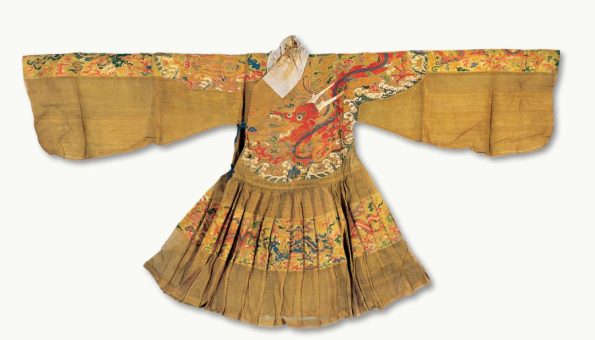
Men’s Attire (Casual Wear)
Ming men’s daily and casual wear (bianfu) was incredibly rich in style and material, changing according to the season and function. Key styles included the Daopao, Chí Thiện, Tieli, and various Shan (shirts).
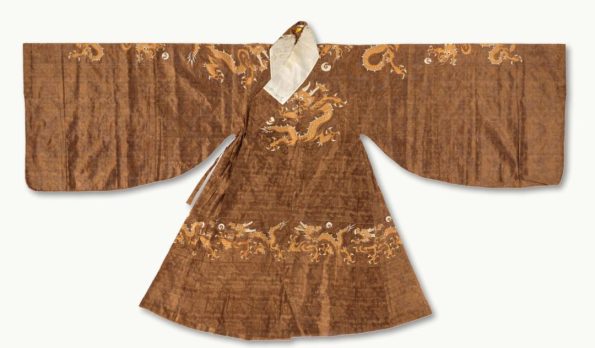
- Tieli /贴里(Pleated Robe): The Ming Dynasty was arguably the last era where Han Chinese men commonly wore a skirt-like lower garment. The Tieli is a robe where the front and back pieces are cut and separated at the waist, with the lower part featuring pleats like a pleated skirt. The left-back side has a slit. The wide, pleated lower hem gave the wearer a steady and dignified appearance, making it very popular. The Feiyu Tieli (Flying Fish Robe) is one of the most famous surviving Ming artifacts.
- Dao Pao/道袍 (Taoist Robe): A straight-cut robe (no separate top and bottom), with a straight, right-covering front lapel. The collar often had a white or plain guard (huling) and was tied with cords. The sides of the robe were split, and the lower hems were pleated or paneled, then folded back and secured inside the rear panel. This structure provided good coverage, preventing the inner trousers from showing, allowing for ease of movement, and lending an air of refinement and scholarly grace.
- Chí Thiện /直身 (Straight Robe): Also known as Changyi (long garment), it was a style that rose to prominence in the Ming Dynasty. It is very similar to the Daopao with a straight collar and side slits, but the main difference is that the side panels (skirts) of the Daopao are folded inward, while those of the Chí Thiện remain on the outside. The Chí Thiện was one of the basic styles for Ming men, worn as an outer robe for casual home wear, and its use was widespread, from the Emperor and officials down to commoners.
Conclusion: The Legacy of Huaxia Yiguan
Nothing lasts forever; the glorious silks and satins of the past have gradually left the stage of history with the passage of time. Yet, the joys, sorrows, and patriotism that were once carried on these garments have not vanished; they are merely hidden away.
Time is an interesting phenomenon. It takes everything away, but leaves clues in the cracks, compelling us to search for historical truths. While we can never walk into the great Ming Dynasty of the past, we can catch a glimpse of its former glory through the fissures of history.
China was traditionally called Huaxia (華夏). What defines Huaxia?
Summer (Xia) is defined by the grandeur of its ceremony and etiquette. Glory (Hua) is defined by the beauty of its attire and cap system.
Let us look back together upon this “beauty of attire and cap” (fuzhang zhi mei), and unexpectedly encounter the traditional culture and aesthetic spirit condensed within millennia of unbroken Chinese civilization.