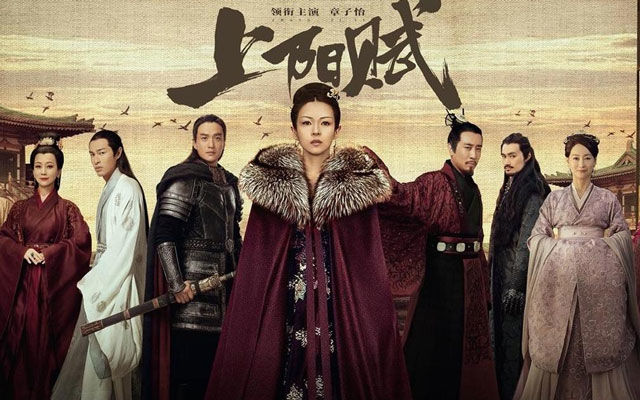
เจ้าหญิงกบฏ (《ซางหยางฟู่》)
The drama The Rebel Princess (《上阳赋》), a historical fictional costume drama set during the late Eastern Jin (东晋, Dōngjìn) and starring Zhang Ziyi and Zhou Yiwei, has attracted significant attention. Although the costumes and props in The Rebel Princess are exquisite, they do not fully restore the historical attire. Therefore, while we won’t dwell on them, we can use this opportunity to review the fashion of the เว่ยจิน (魏晋, Wèijìn) period.
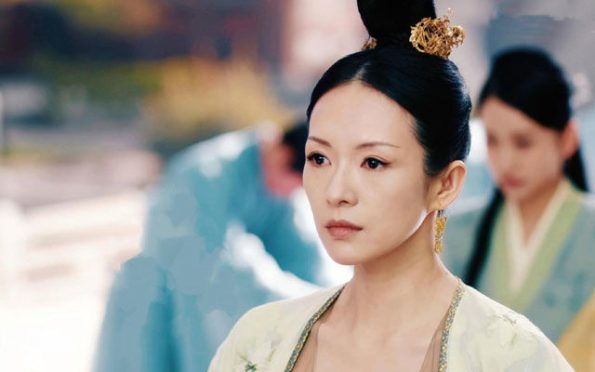
เจ้าหญิงกบฏ (《ซางหยางฟู่》)
The Basic Situation of the Wei-Jin Southern and Northern Dynasties Period
First, a brief introduction to the period: “Wei-Jin Southern and Northern Dynasties” (魏晋南北朝, Wèijìn Nánběicháo) is a collective term for several dynasties, though the individual regimes or states numbered in the dozens.
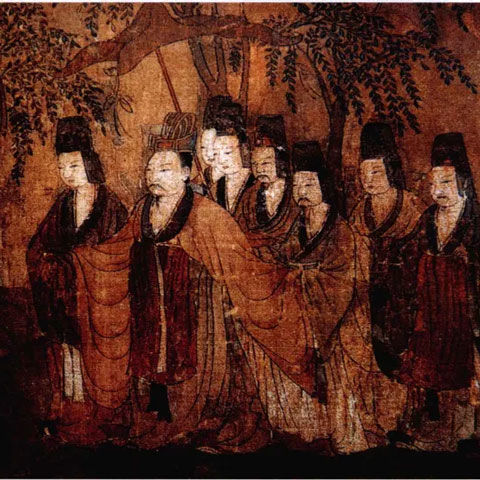
Wei-Jin Southern and Northern Dynasties” (魏晋南北朝, Wèijìn Nánběicháo)
The era preceding the Wei-Jin Southern and Northern Dynasties was the Three Kingdoms Period (三国时期, Sānguó Shíqī)—Wei, Shu, and Wu. The “Wei” refers to the State of Wei during the Three Kingdoms. The “Jin” (晋) primarily refers to the Western Jin Dynasty (西晋王朝, Xījìn Wángcháo), established by the Sima clan after the fall of the Three Kingdoms, and the later ราชวงศ์จิ้นตะวันออก (东晋王朝, Dōngjìn Wángcháo), which ruled the southern region of ancient China.
การ “Southern and Northern Dynasties” (南北朝, Nánběicháo) refers to the various dynasties that unified the north and south of China after the official demise of the Jin Dynasty, lasting until the establishment of the ราชวงศ์สุย (隋朝, Suícháo), which officially ended the almost 400-year long Wei-Jin Southern and Northern Dynasties period.
Thus, we know that the เว่ยจิน era was a time of political and economic turmoil. The Scholar-Official Class (士大夫, Shìdàfū), which in ancient times referred to those holding official positions, but also included those with scholarly reputations who did not hold office, pursued hedonism and indulged in a decadent lifestyle. They adopted the philosophies of Laozi and Zhuangzi (老庄, Lǎo Zhuāng) and Buddhism (佛教, Fójiào) as the fashion of the day. This trend was directly reflected in the clothing of the time.
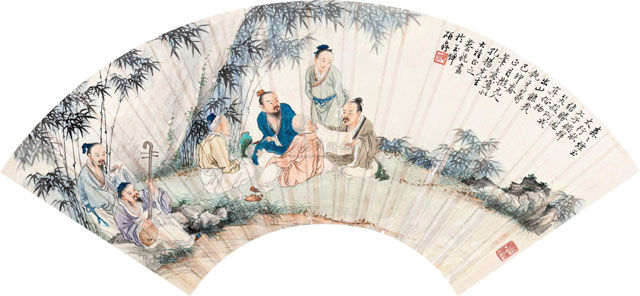
Seven Sages of the Bamboo Grove (竹林七贤, Zhúlín Qī Xián)
Representative Attire
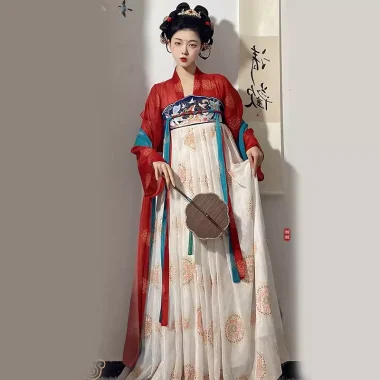
The most representative figures of this trend were the Seven Sages of the Bamboo Grove (竹林七贤, Zhúlín Qī Xián). Broad clothes and flowing sashes were the popular fashion. Men pursued relaxation, nature, and leisure, wearing clothes with open collars and sleeves, and draping their garments over their shoulders. Women’s clothing featured Long Skirts (长裙, Chángqún), wide sleeves, and multiple layers of decorative ribbons, presenting an elegant and ethereal appearance.
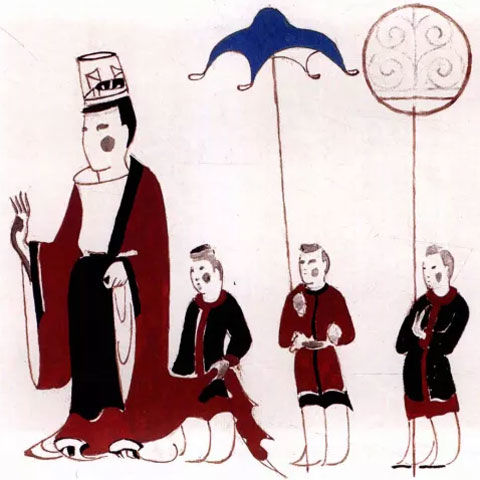
Northern Wei Dynasty Murals from the Mogao Caves, Dunhuang
Men’s Attire of the Wei-Jin Period
During the Wei-Jin period, men wore loose Shanzi (衫子, Shānzi)—a loose, open-necked robe—with their chests and arms exposed. Seeking ease, naturalness, and leisure, the era’s famous scholars wore wide outer robes without the Zhongyi (中衣, Zhōngyī), or inner garment, which only appeared in that era.
This attire precisely portrayed their breakthrough from ritualistic restraints and their unconstrained, reckless attitude toward life. The garments they wore were neither the ชุดคลุมยาว (深衣, Shēnyī) that predated the Western Han nor the ชุดคลุม (袍, Páo) of the Eastern Han. Contemporary records indicate this type of clothing was called Shanzi (衫子, Shānzi). The characteristics of the Shanzi were that it was light, airy, plain, and loose, which best expressed the spiritual state of emptiness and brightness.
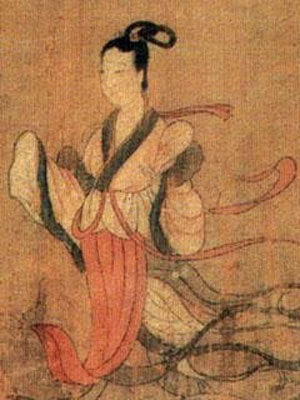
Women’s Attire of the Wei-Jin Period
The characteristics of women’s clothing during this period included wide, symmetrical lapels, wide sleeves, with the cuffs, lapels, and hem decorated with edges of a different color. Underneath, they wore skirts of the same color with stripes, and the waist was tied with a silk sash.
Hairstyles of the Wei-Jin Period
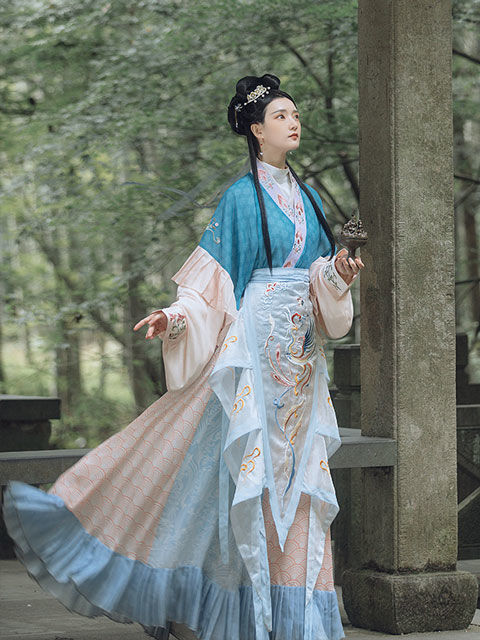
Some hairstyles involved a finely combed cross-shaped bun on top of the head, known as the ขนมปังรูปกากบาท (十字髻, Shízì Jì). Others were combed into various loops that swayed in the air, called the หลิง-เช่ บัน (灵蛇髻, Língshé Jì, Spiritual Snake Bun) or the เฟยเทียนบัน (飞天髻, Fēitiān Jì, Flying Celestial Bun).
Because the hair buns were often too large and heavy to be worn constantly, they were usually placed on a shelf when not in use. Women from wealthy families wore a lot of jewelry in their hair, and even women from poorer families would insert some flowers and hairpins.
บทสรุป
With the passage of time, clothing has changed significantly, but the style of the เว่ยจิน dynasty continues to be beloved by ฮั่นฝู (汉服, Hànfú) enthusiasts today. This is not only due to the magnificent color schemes of the Wei-Jin style Hanfu but also because of its symbolic meaning—the pursuit of a free and relaxed life.